The Otsuka Lotec No.8 represents a significant step in the evolution of Japanese independent watchmaker Jiro Katayama's work. While Katayama's previous creations often embraced conceptual complexity, the No.8 focuses on consolidation and refinement. It is a timepiece that prioritizes mechanical behavior over visual polish, offering a unique perspective on how a watch can communicate its inner workings.
The Case: An Instrument-Like Presence
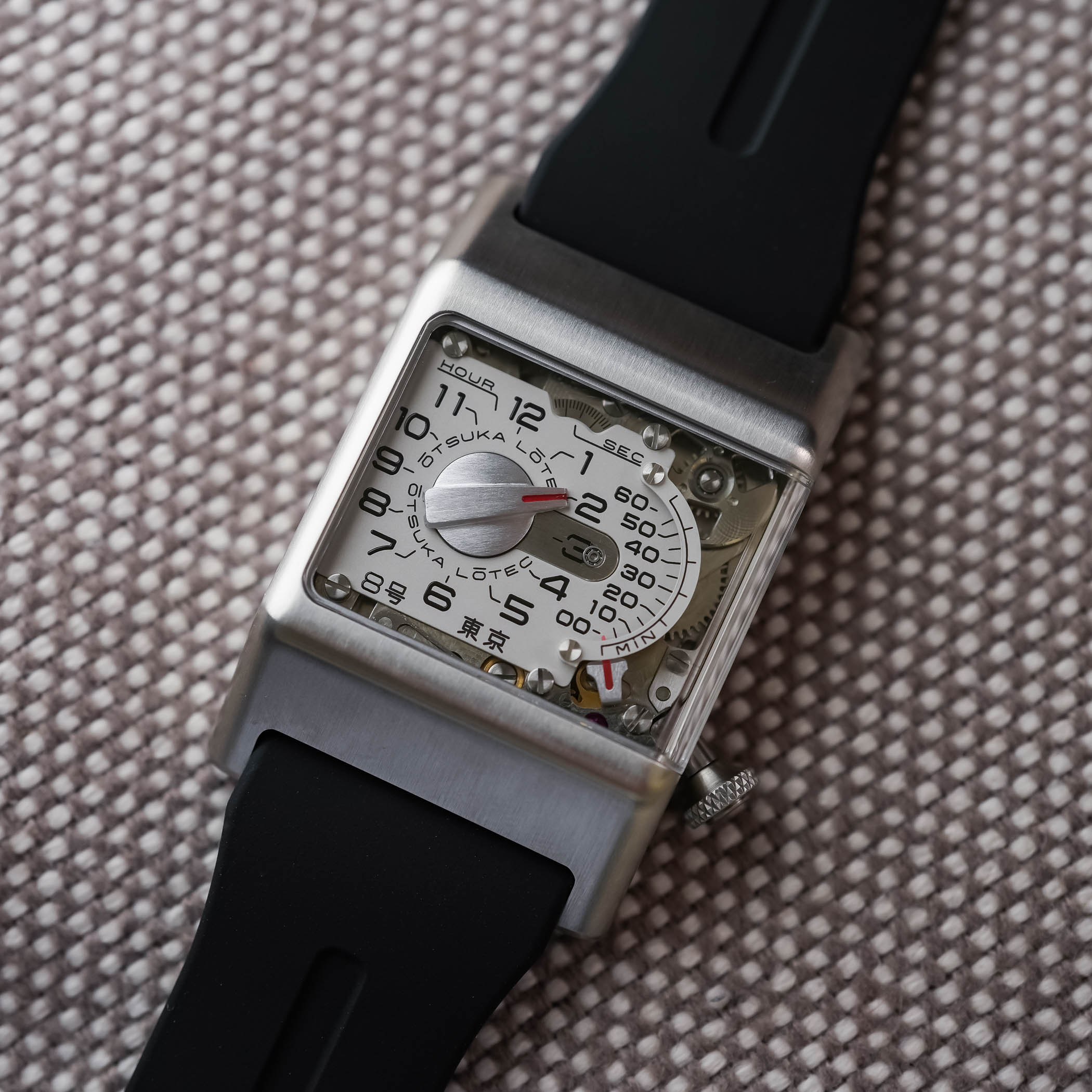
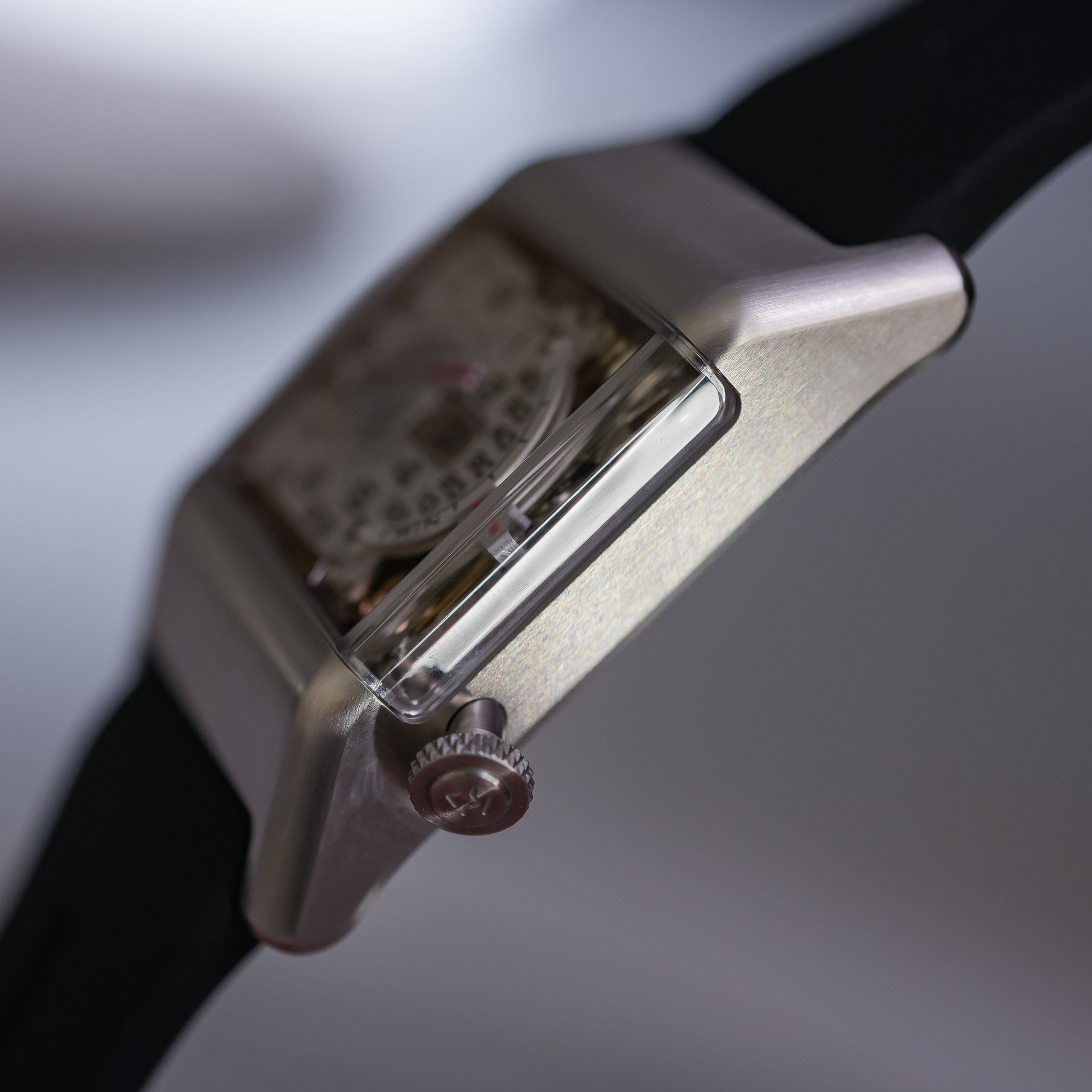
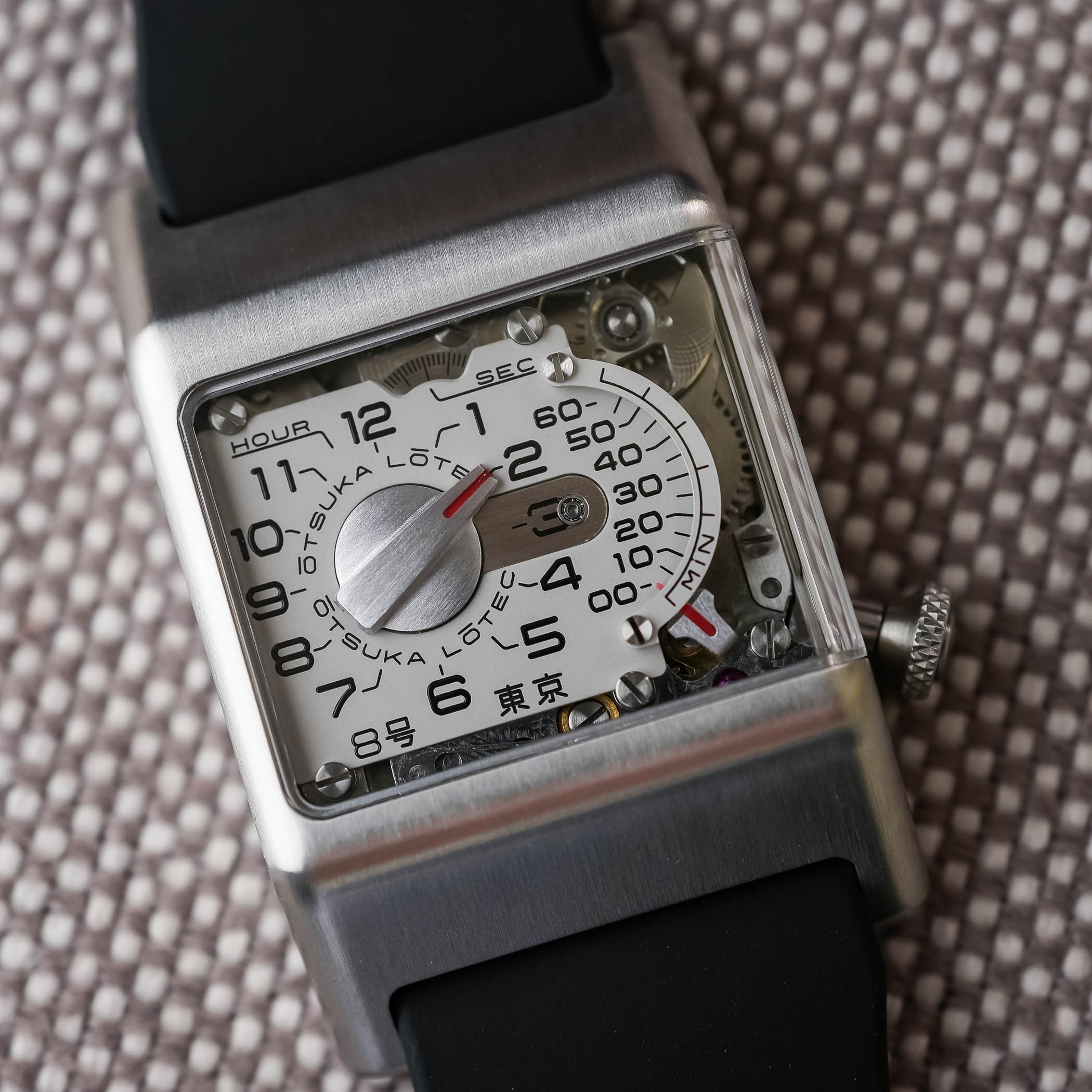
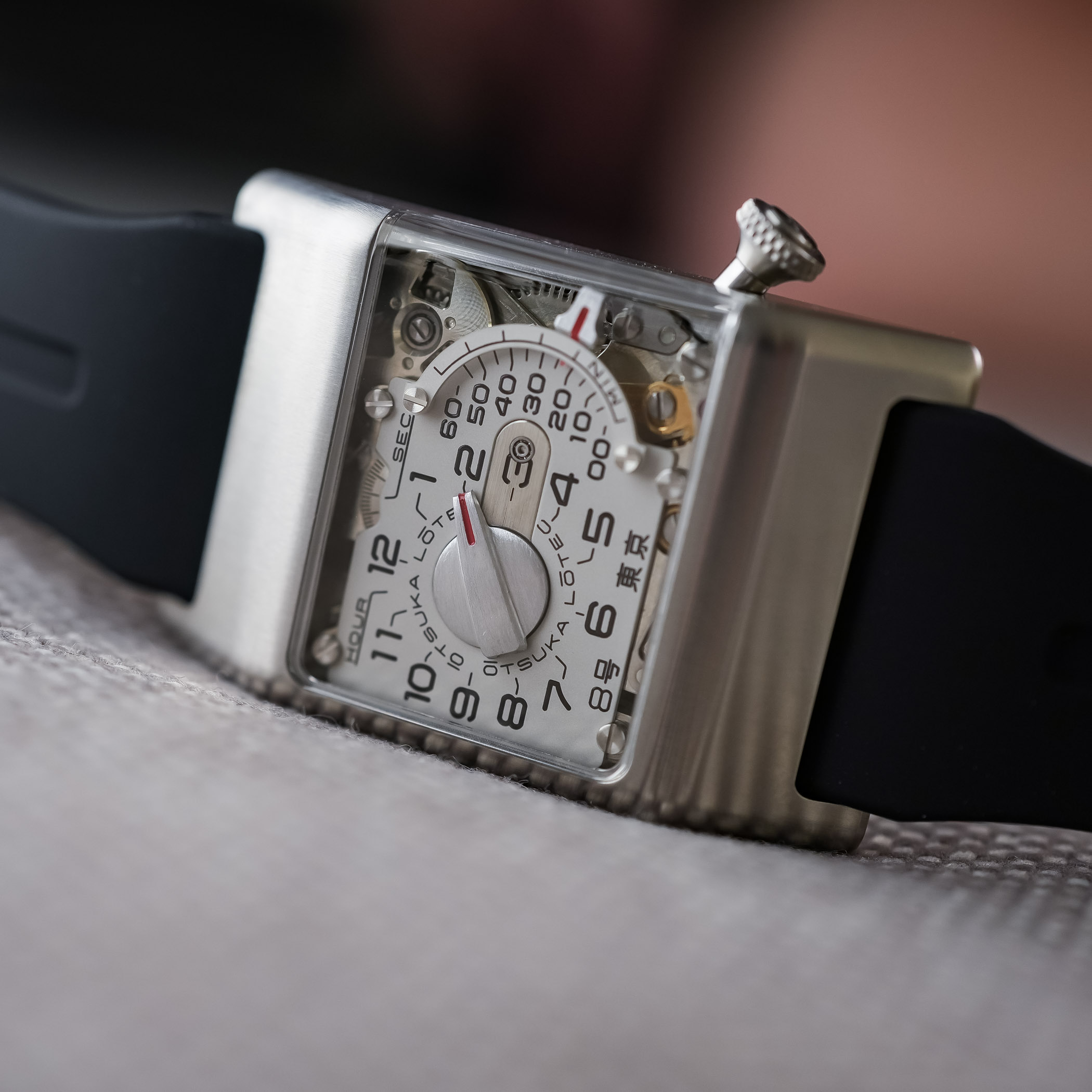
The rectangular stainless steel case measures 31mm in width, 10.8mm in thickness, and just under 48mm in length. Its proportions are controlled, especially considering the complex architecture beneath the crystal. The straight-grained finish is deliberately raw, with no polishing to soften edges or disguise machining marks. This gives the watch the feel of a milled component rather than a traditional luxury object, yet there is undeniable finesse in its execution.
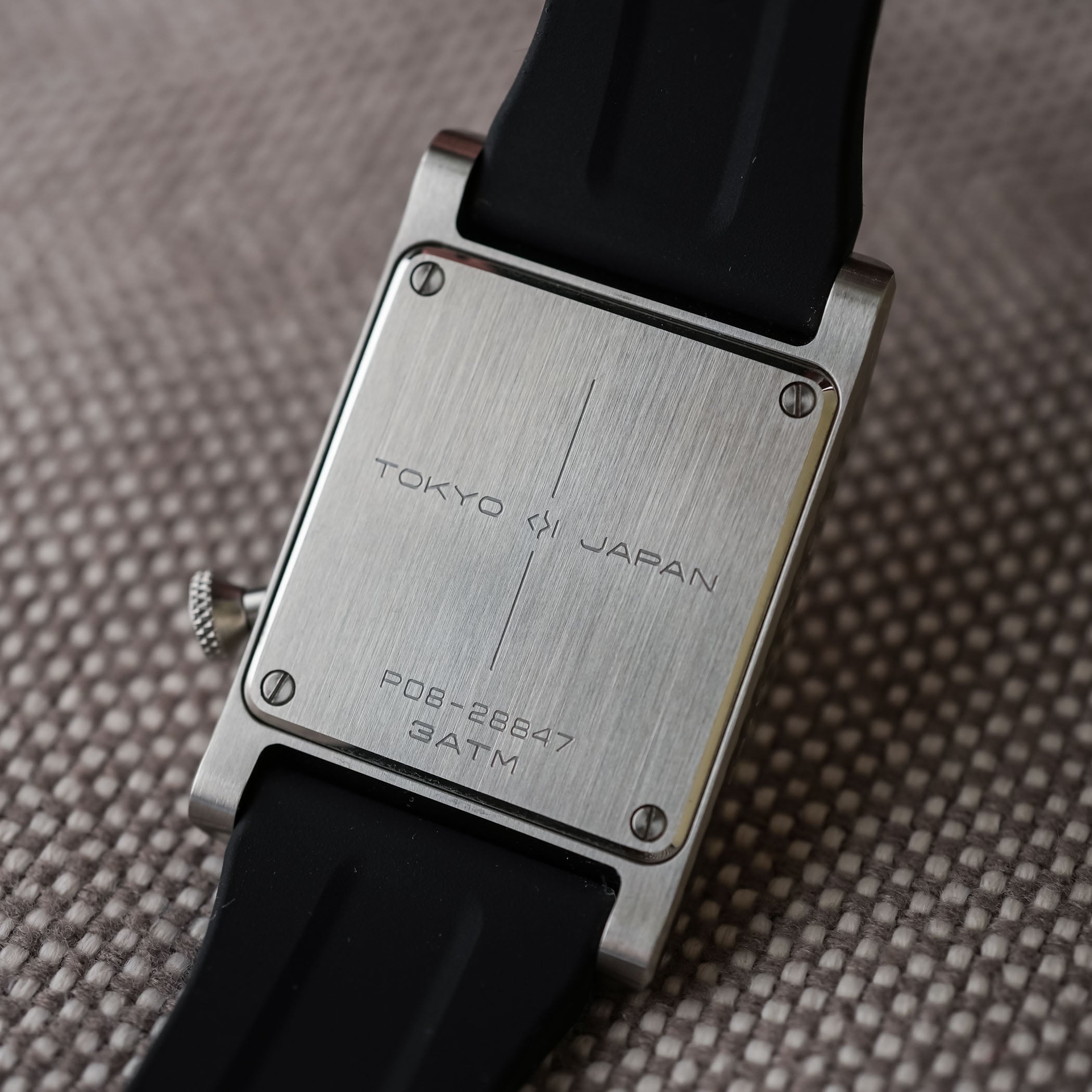
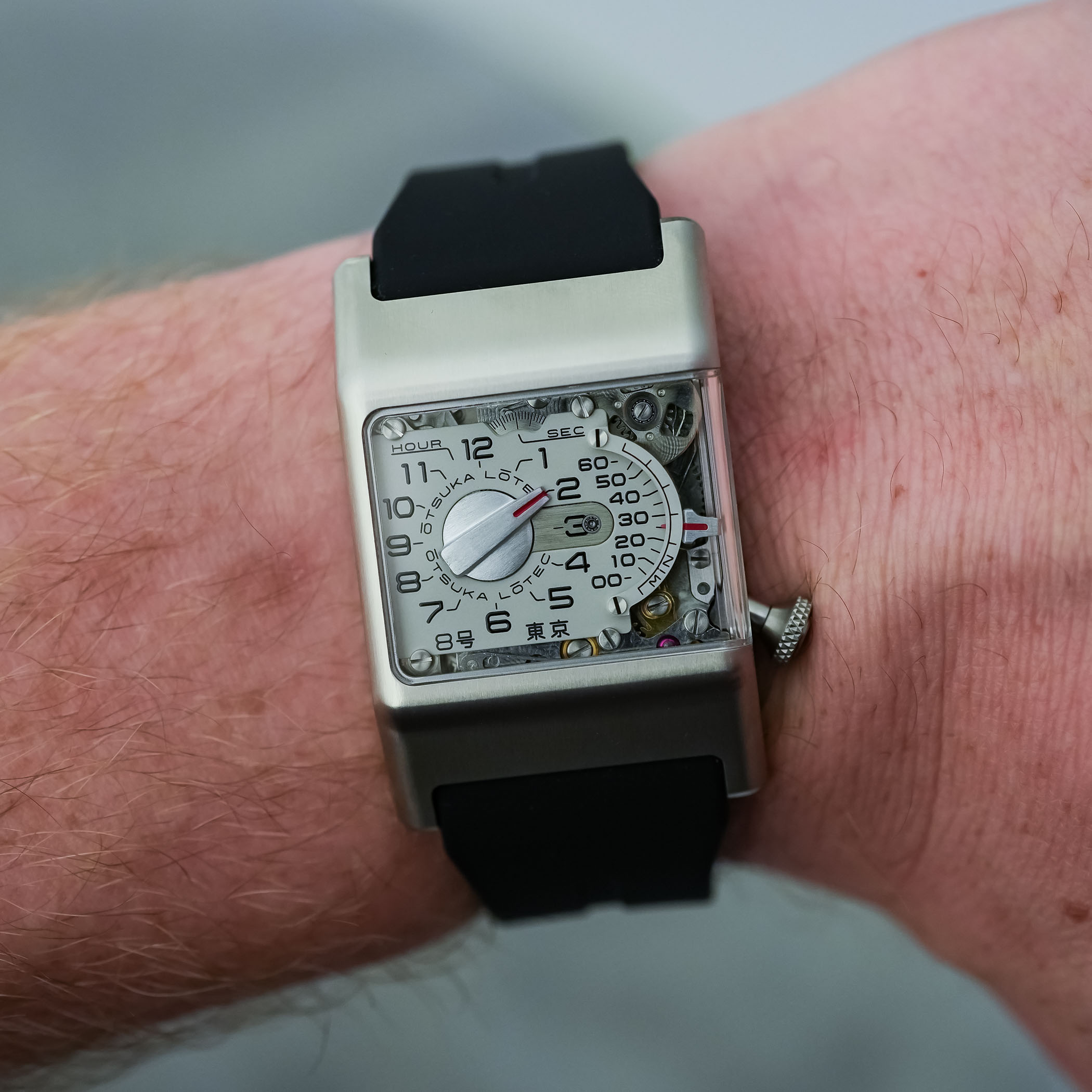
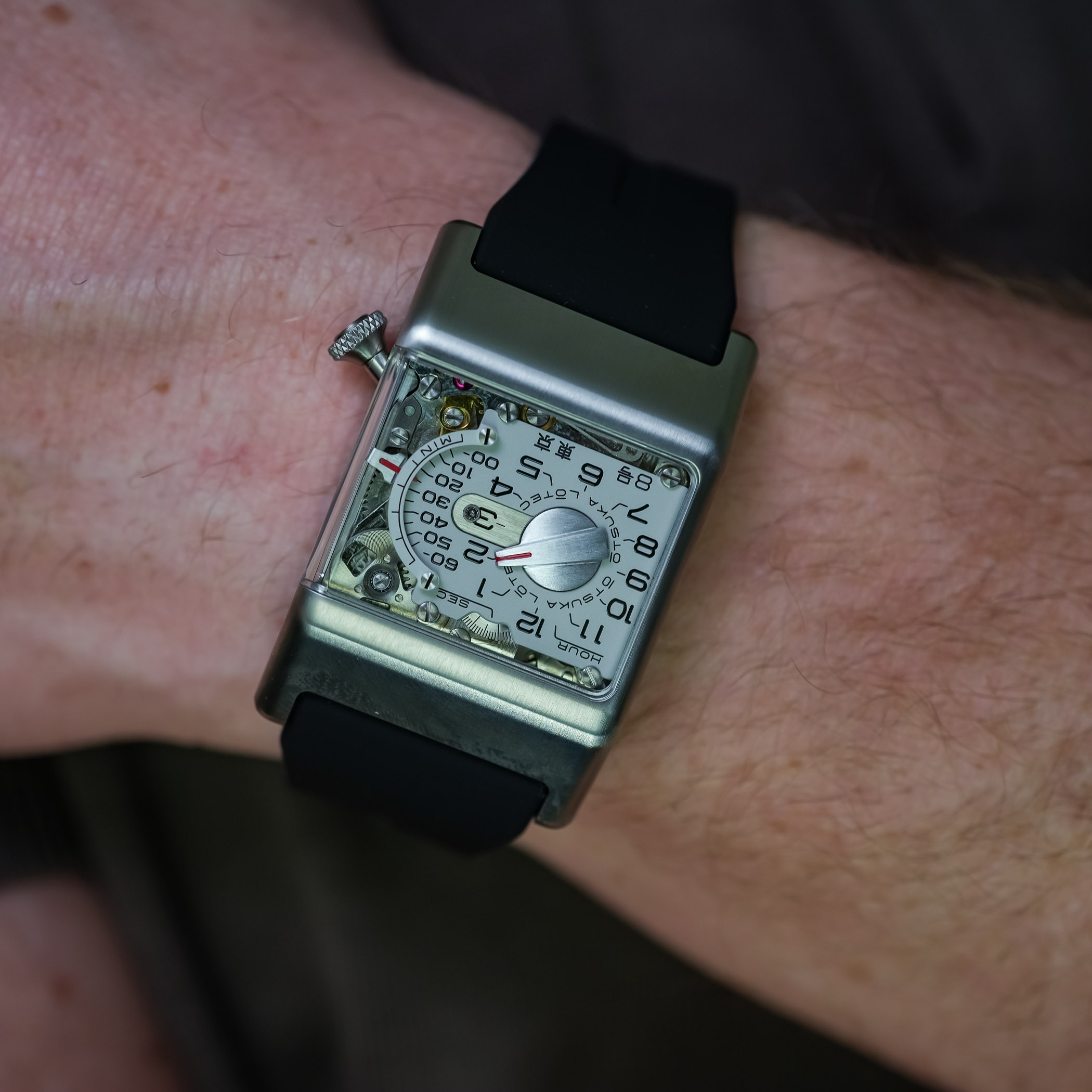
The curvature of the sapphire crystal on the right side creates a subtle visual asymmetry, resembling a protective viewport over a sensitive mechanism. The crown, positioned at 4 o'clock, is small and tactile, functioning as a practical knob that aids ergonomics. The solid caseback is secured by four screws, and the watch sits flat on the wrist. Despite its angular design, the watch wears comfortably even on wrists measuring around 16cm, thanks to the shape of the lugs and the curvature of the caseback.
The Dial: A Control Panel for Time
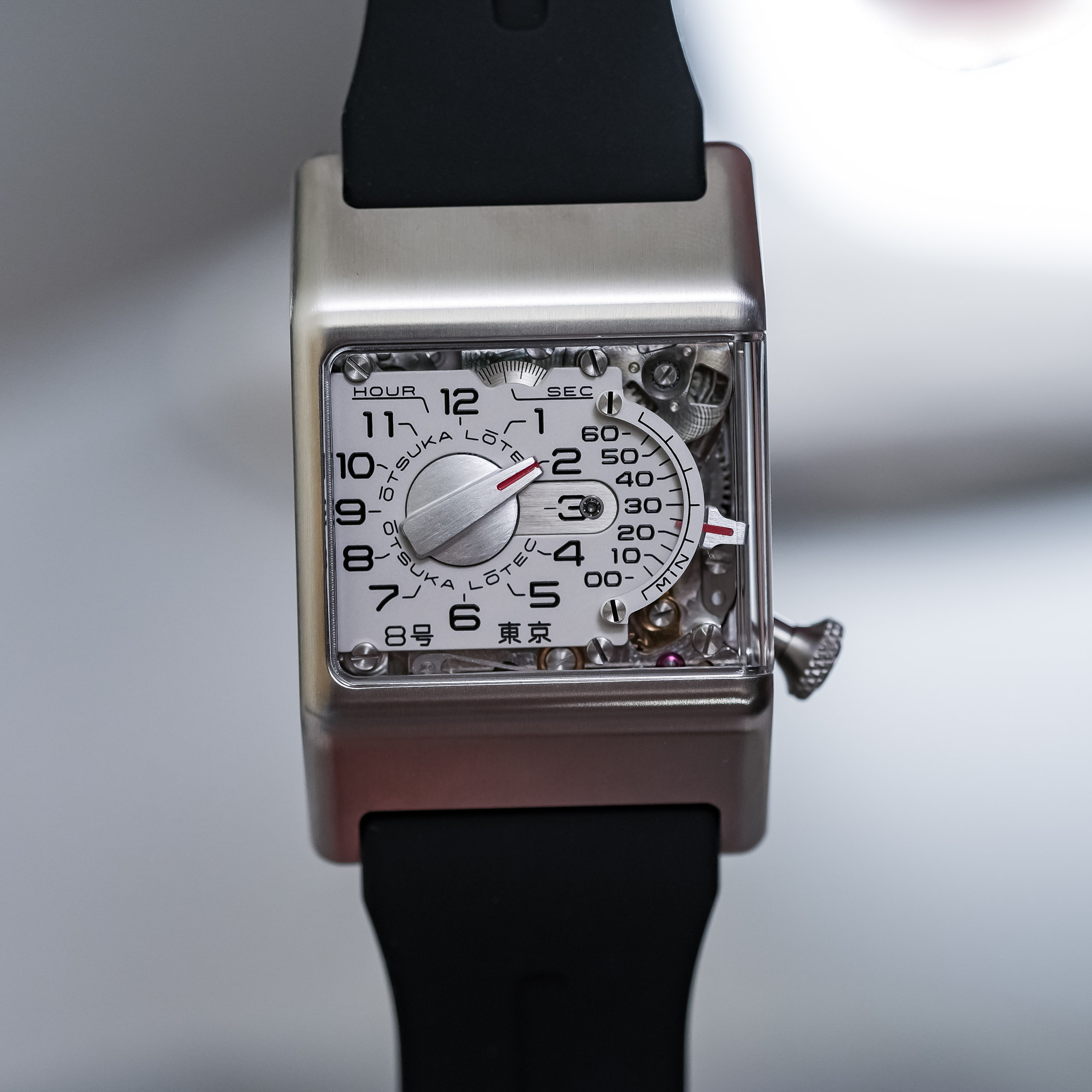
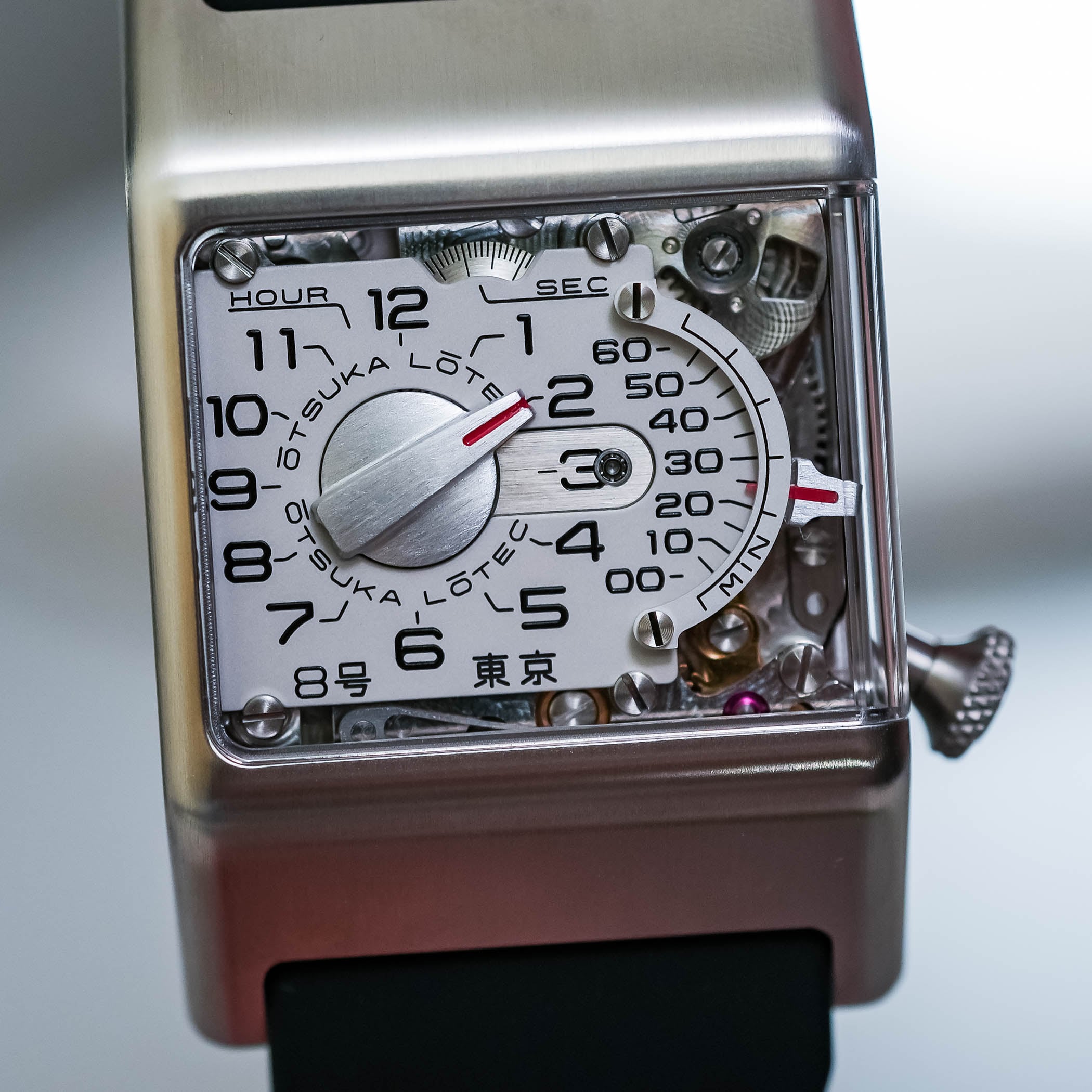
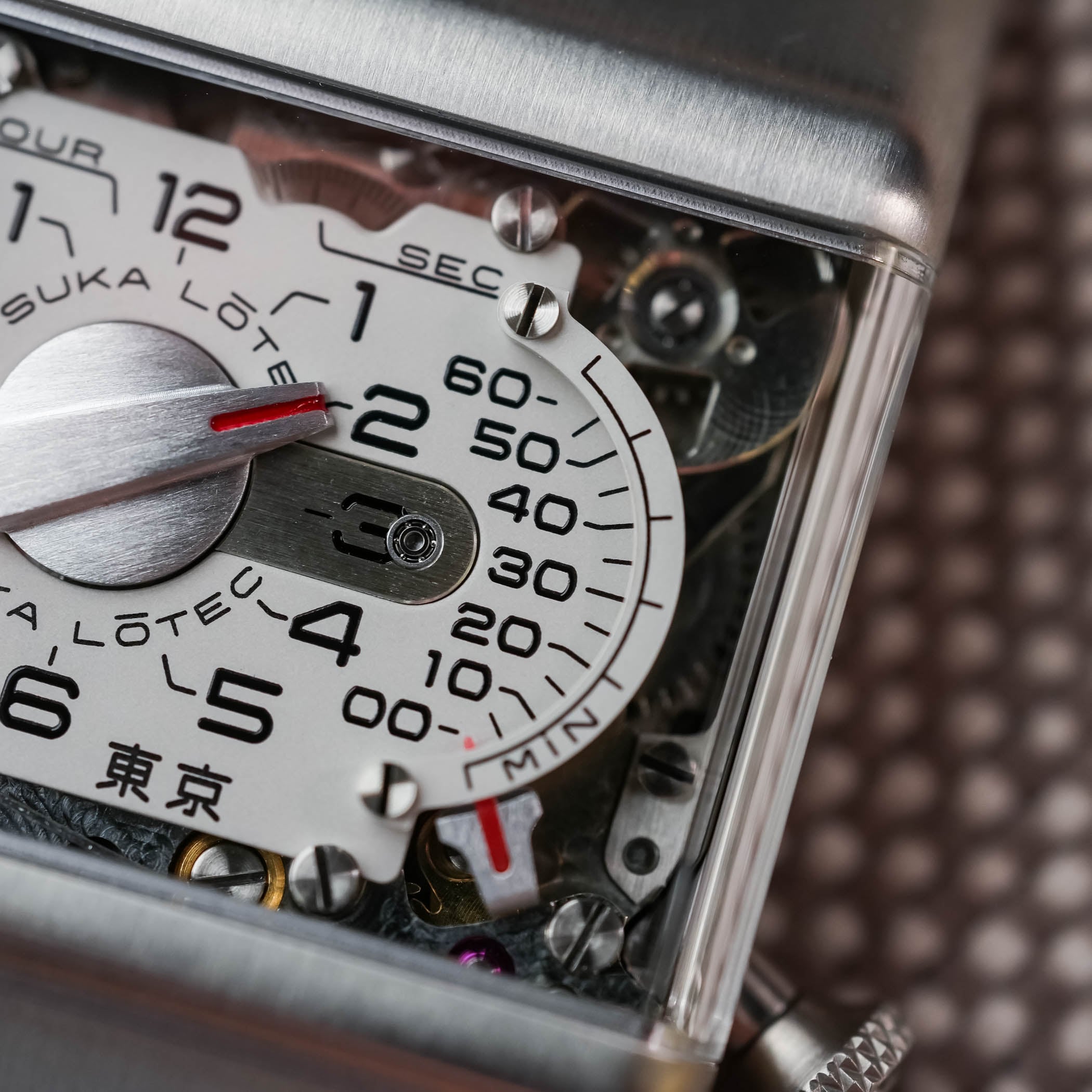
Calling the display a 'dial' would be misleading; it is more accurately described as an aluminium control panel. The layout is divided into two distinct zones. On the left, a large jumping hour disc features bold, industrial numerals and a red-striped pointer. A continuously rotating disc at 12:30 indicates running seconds.
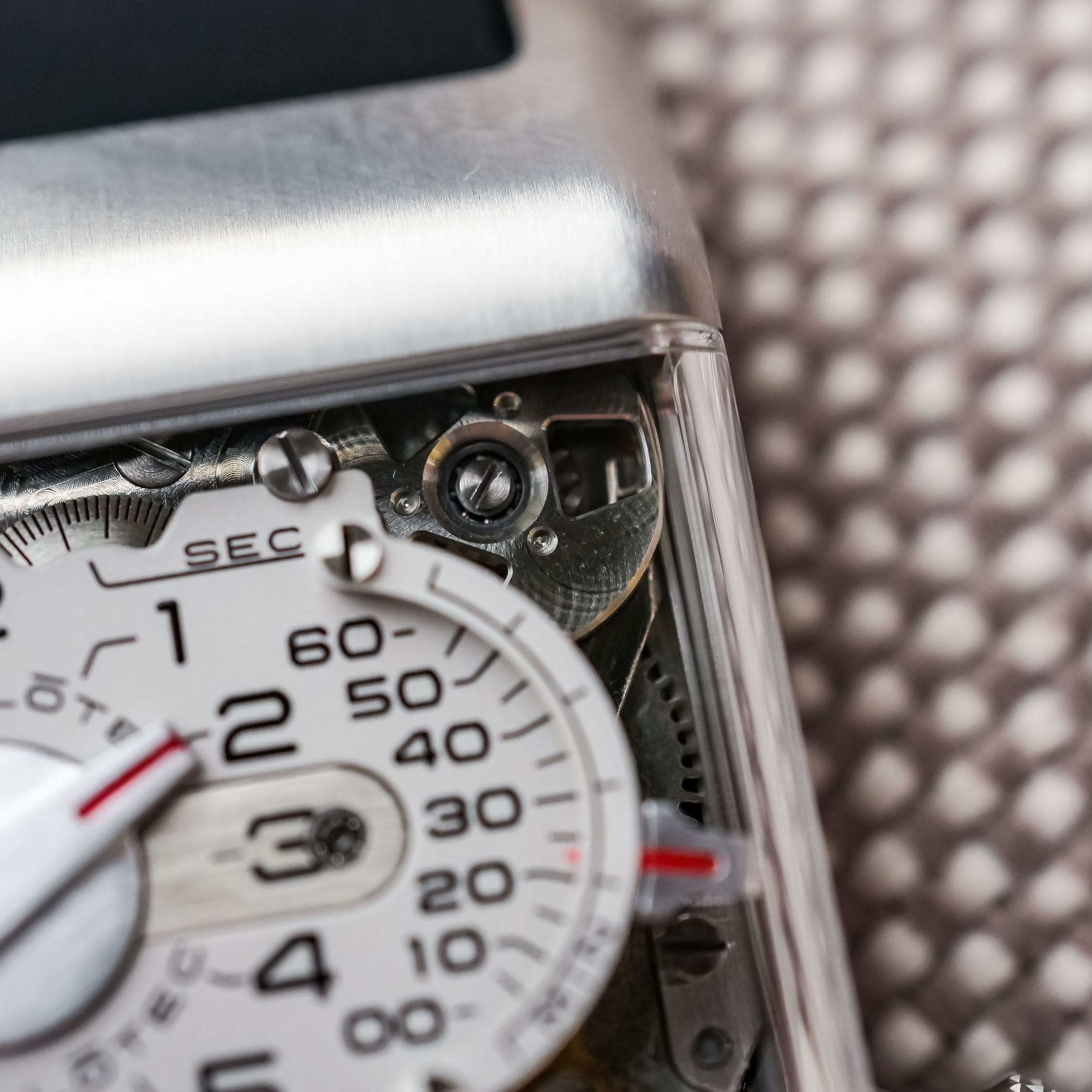
On the right, a retrograde minute display takes center stage. An arched component, raised above the plate, carries a red-marked pointer. The double-digit minute track runs vertically, with the carrier moving progressively upward from 0 to 60. At the 60-minute mark, the system resets—but not abruptly. A visible flywheel at the top right controls the return, making it a slow, almost dramatic release. When the minute hand returns to zero, the hour disc jumps to the next hour. This action is nearly audible in a quiet room and is deliberately slowed for effect, inviting the wearer to observe the mechanical theatre.
Despite the unconventional layout, legibility is surprisingly immediate. The contrast between the industrial aesthetic and the fluid motion of the components creates a captivating experience.
The Movement: Mechanical Theatre
The Otsuka Lotec No.8 is powered by a Miyota 90S5 automatic base calibre, augmented by an in-house module comprising 62 components. The base movement is not the focus; the display is. The module adds complexity not in finishing but in function. Ball bearings are central to the design: one ultra-small 1.5mm bearing handles critical motion, supported by two larger 2.5mm bearings. This results in a fluidity that contrasts with the otherwise industrial aesthetic.
The power reserve is limited to approximately 32 hours, a consequence of the demanding display mechanism. However, this limitation contributes to the watch's liveliness—the slow build-up of tension, the controlled reset, all visible through the dial. The movement operates at 28,800 vibrations per hour and features 33 jewels.
On the Wrist and Availability
The 24mm black rubber strap is wide and visually integrated into the case. Its flexibility compensates for the case's rigid geometry, ensuring good comfort. The watch feels like an instrument, anchored securely to the wrist.
The Otsuka Lotec No.8 takes the retrograde logic of the No.6, the mechanical theatre of the No.9, and the experimental spirit of the No.5 KAI and No.7.5, merging them into a more focused object. It is a watch that you don't just read; you observe how it's constructed, how it moves, and how it resets.
Like all Otsuka Lotec pieces, the No.8 remains frustratingly inaccessible. Distribution is limited to Japan, with lottery-based allocation and low production numbers. The price is JPY 990,000 (approximately EUR 5,300), which is approachable for independent watchmaking. Yet, the constraint of acquisition is part of the appeal—this is not a watch you buy; it's one you manage to get.
Technical Specifications
- Case: 31mm width x 47.8mm lug-to-lug, 10.8mm thickness, straight-grained 316L stainless steel, curved sapphire crystal with AR coating, solid steel back, crown at 4 o'clock, 30m water resistance.
- Dial: Jumping hours on the left, 90-second running indicator on a disc at 12 o'clock, retrograde minutes with flywheel at 3 o'clock.
- Movement: Miyota 90S5 base calibre, automatic, in-house display module, 33 jewels, 3 ball bearings, 28,800 vibrations/hour, approximately 32-hour power reserve.
- Strap: 24mm black rubber strap with steel pin buckle.
- Availability: Exclusively from the brand's website, raffle-based allocations, only for applicants with a Japanese credit card and shipping address.
- Price: JPY 990,000 (tax included), approximately EUR 5,300.
The Otsuka Lotec No.8 is a rare example of a watch that successfully translates industrial design principles into a wearable timepiece. It challenges conventional notions of luxury, offering instead a raw, mechanical honesty that will appeal to collectors seeking something truly unique.
What is the Otsuka Lotec No.8?
Otsuka Lotec No.8 review
Jiro Katayama industrial watch design
Otsuka Lotec No.8 price and availability
Otsuka Lotec No.8 specifications
What makes the Otsuka Lotec No.8 unique?
How does the retrograde minute work on the Otsuka Lotec No.8?
What movement is in the Otsuka Lotec No.8?
How much does the Otsuka Lotec No.8 cost?
Is the Otsuka Lotec No.8 water resistant?
What is the power reserve of the Otsuka Lotec No.8?
How can I buy an Otsuka Lotec No.8?
What is the case size of the Otsuka Lotec No.8?
Who is Jiro Katayama?
What is the difference between Otsuka Lotec No.6 and No.8?